
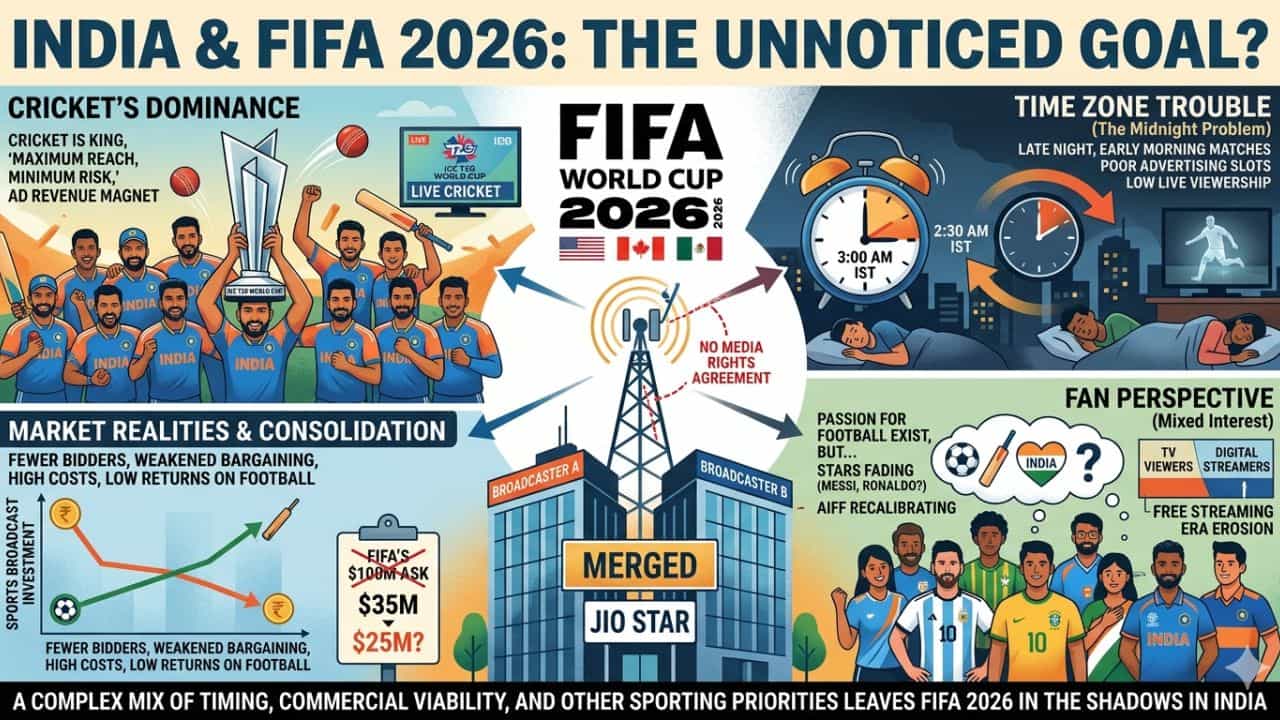
FIFA has turned down JioStar’s bid for the broadcasting rights to the 2026 FIFA World Cup in India, which was valued at $20 million, or roughly Rs 165 crore. The decision came as FIFA was looking for a significantly higher amount, as they had initially set their sights on around Rs 950 crore for these rights. The rejection of JioStar‘s offer highlights the ongoing negotiations and the financial expectations that FIFA has for this prestigious tournament. As it stands, no broadcaster has secured the rights to air the matches in India, leaving fans in a state of uncertainty.
With the 2026 FIFA World Cup just around the corner, Indian football enthusiasts are increasingly anxious about how they will be able to catch the action. The absence of a confirmed broadcaster means that fans are left in limbo, unsure of where to turn for coverage of the matches. While JioStar has been reported as a frontrunner in the bidding process, the rejection of their initial offer has raised questions about the future of broadcasting for this major event in India. The clock is ticking, and the pressure is mounting for a deal to be finalized soon.
As negotiations continue, it remains to be seen whether JioStar or another contender will step up with a more appealing offer that meets FIFA‘s expectations. The stakes are high, not just for the broadcasters but also for the millions of fans eager to witness the world’s best teams compete on the global stage. With the tournament fast approaching, the urgency to secure broadcasting rights has never been greater, and all eyes will be on the developments in the coming days.

Why Indian Channels Not Showing Much Interest in FIFA 2026 ?
The lack of enthusiasm from Indian broadcasting companies regarding FIFA 2026 can be attributed to several key factors. Firstly, the tournament is set to take place in the United States, which means that the matches will air in India during the late night and early morning hours, typically between 12:30 am and 7:30 am. This timing poses a significant challenge, as the majority of the Indian audience will be asleep, leading to a limited viewership. Consequently, the potential for advertising revenue during these hours is minimal, making it less appealing for broadcasters to invest in airing the matches. With low viewership expected, the likelihood of attracting sponsors for advertisements diminishes further, creating a less than enticing scenario for networks.
Another crucial aspect to consider is the cultural landscape of sports in India, where cricket reigns supreme. While football does have a dedicated fan base in certain regions, such as Kerala, it simply does not hold the same level of popularity or significance as cricket does nationwide. This disparity in interest means that even among the millions of football enthusiasts in the country, the demand for FIFA 2026 coverage may not be strong enough to motivate broadcasters to step in. As a result, many fans are left feeling disheartened, hoping that a last-minute deal will emerge to secure broadcasting rights and allow them to enjoy the excitement of the World Cup.